I did not start GuardBum because I had military life completely figured out. I started it because I have spent nearly three decades trying to answer a question:
How do you serve seriously without surrendering every other part of your life?
I wanted more than one identity
Early in my career, I served in 2nd Ranger Battalion. The standards were high, the training was intense, and 16-hour days were common. I valued the discipline, the teamwork, and the feeling of being surrounded by people who could be trusted when things became difficult.
But I was also interested in photography, computers, and what was then the emerging world of digital video editing. I wanted time to learn, travel, and explore interests beyond the military.
I did not want to stop serving. I simply could not imagine giving every part of myself to one institution for the next 20 years.
That realization eventually led me to Green to Gold and ROTC. College gave me room to explore subjects outside the Army, but I soon returned to active duty as an armor officer.
While attending the Armor Officer Basic Course, I volunteered for a deployment to Iraq. I did not know which unit I would join; I only knew people were needed. I ended up serving with Louisiana’s 256th Brigade during its 2004–2005 deployment, primarily operating from the Camp Victory and Camp Liberty area in Baghdad.
That was my first close look at the National Guard.
A different kind of military culture
The Guard culture was different from what I had known in Ranger Battalion. It was less rigid and, in many ways, more egalitarian. Leaders often gave their subordinates greater freedom to solve problems and accomplish the mission.
The level of discipline did not always look like what I had become accustomed to in a special-operations environment, but I also saw something valuable: mature leaders being trusted to exercise judgment and Soldiers bringing experience from outside the Army into the formation.
After Iraq, I returned to the 3rd Infantry Division and served as a tank platoon leader. That experience taught me a great deal about leadership and how the conventional Army operates.
It also reminded me of the bargain that comes with active duty. Your time is not entirely your own. Even a weekend away can feel more like an authorized pass than a normal part of life.
That bargain works for many people, and the Army needs professionals willing to accept it. I eventually realized it was not the best long-term fit for me.
I wanted to continue serving, but I also wanted enough autonomy to build a life outside the military.
Building a career between the lines
I joined the Oregon National Guard in 2007 and almost immediately went onto active-duty operational support orders as the organization prepared for another deployment.
Since then, my career has included deployments, temporary orders, traditional drilling status, civilian employment, and eventually a Title 32 technician position. During a few lean years when orders were difficult to find, I worked in corporate America. At other times, the space between orders became a welcome mini-sabbatical that allowed me to travel, learn, and pursue other interests.
It has not been a neat, predictable career ladder. That is part of the point.
The Guard gave me opportunities to serve as an infantry company commander, work in battalion operations, command a Mobile Public Affairs Detachment, and spend much of the last decade working in public affairs.
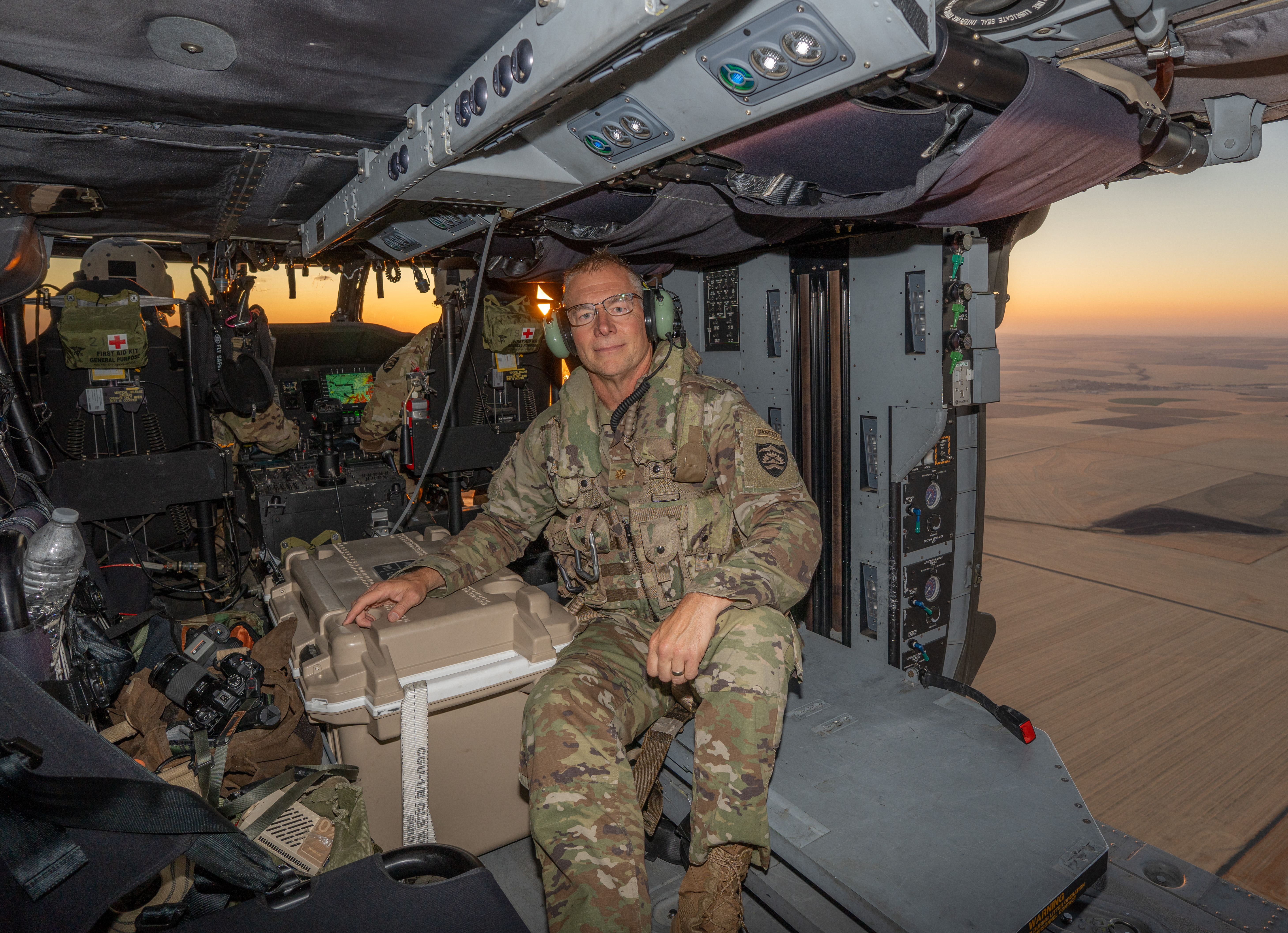
As a military journalist, I found a way to bring together the interests I had worried I would have to abandon: photography, video production, writing, and military service. I have been able to join units in the field, tell their stories, and show the public what Guard Soldiers are capable of doing.
In many ways, my career eventually came full circle.
What “Guard Bum” means to me
“Guard Bum” is a term of affection. It does not mean avoiding work or taking service less seriously.
A Guard Bum learns how to make the lifestyle work.
It can mean finding a set of orders, taking a mission, attending a school, deploying, returning to civilian employment, traveling, or stepping away long enough to decide what comes next. It means remaining physically, professionally, and financially prepared so that you can move when the right opportunity appears.
There are tradeoffs. Orders end. Opportunities are not guaranteed. Military administrative systems can be frustrating, and benefits and retirement rules often require more research than they should.
The AGR program offers greater stability and is essential to keeping the Guard functioning, but it is also a full-time military commitment, with many positions carrying substantial administrative responsibilities. That is a good path for many people. It is simply a different bargain.
What has always kept me serving is not the paperwork. It is the mission, the teamwork, the camaraderie, and the people standing to my left and right.
The citizen-Soldier
The citizen-Soldier is part of a distinctly American military tradition.
The Constitution gives Congress authority both to raise and support armies and to organize, arm, discipline, and call forth the militia. America has always needed military professionals, but it has also depended on citizens who bring civilian skills, experiences, and perspectives into uniform.
Throughout my career, I have served alongside doctors, lawyers, business owners, technicians, students, tradespeople, and public servants. Many could earn more money or have much easier lives by staying home.
They serve because they believe in service, because they want to be part of something larger than themselves, and because they care about the people beside them.
Some of the best people I have ever met came into my life through the military. Those friendships and shared experiences are difficult to explain to anyone who has not been part of a close military team.
That is the part of the Guard that cannot be measured on a benefits chart.
Why GuardBum exists
There are plenty of official websites that explain requirements, policies, and programs. There are fewer places that explain how to build a life around National Guard service—or how to recognize all the options that may be available.
GuardBum is meant to help fill that gap.
Find the Mission is about discovering opportunities, understanding career options, and knowing where to look next.
Stay Ready is about maintaining the fitness, health, skills, and personal readiness necessary to take advantage of those opportunities.
Live More is about using military benefits wisely while still making room for travel, hobbies, family, financial independence, and a life beyond drill.
GuardBum Stories will highlight citizen-Soldiers who have found interesting ways to combine military service with meaningful civilian lives.
This will not be a recruiting pitch or an official military publication. I want GuardBum to be honest about the good and the bad: the camaraderie and the bureaucracy, the opportunities and the uncertainty, the great leaders and the difficult ones.
The Guard cannot protect anyone from every bad assignment or poor leader. But its structure can keep one chapter from defining an entire career. You can change units, seek another mission, adjust your status, pursue a civilian opportunity, or take a needed break.
That flexibility can be powerful.
Choose your own adventure
The Guard Bum lifestyle exists a little outside the normal career path. It can provide meaningful service, employment, benefits, retirement, adventure, and friendships—while leaving room to pursue more than one identity.
It is not the right path for everyone, but it is a real option.
GuardBum exists to help citizen-Soldiers see those options, prepare for them, and build a life that is not dictated entirely by someone else’s plan.
Find the Mission. Stay Ready. Live More.
Then choose your own adventure.